Woven Geotextile Selection Guide: Strength & Uses
Key Takeaways:
- Match Fabric Strength to Soil & Load Conditions – Selecting the right woven geotextile requires evaluating subgrade strength, tensile requirements, AOS, and permittivity to ensure proper separation and reinforcement performance.
- Woven Geotextile Is Best for Structural Reinforcement – Compared to nonwoven options, woven geotextiles provide higher tensile strength and lower elongation, making them ideal for roads, driveways, construction platforms, and heavy-load applications.
- Proper Installation Determines Long-Term Performance – Installing geotextile after subgrade preparation, ensuring correct overlap, and protecting it from UV exposure can extend service life to 25–50 years and significantly reduce maintenance costs.
Choosing the right woven geotextile is not just about picking a strong fabric. It requires matching engineering properties to soil conditions, load demands, drainage requirements, installation method, and long-term durability expectations.
When specified correctly, woven geotextiles significantly improve pavement performance, prevent aggregate contamination, and extend infrastructure lifespan.
Woven geotextiles are manufactured by interlacing polypropylene tapes or yarns into a stable, high-strength structure.
According to the International Geosynthetics Society, woven geotextiles are primarily used for separation and reinforcement in civil engineering applications, particularly roads and load-bearing platforms. Their predictable tensile properties and durability make them ideal for structural stabilization projects.
This guide explains how to select the right woven geotextile, compares it with alternatives, and answers the most common buyer questions.
Key Factors for Selection
Selecting woven geotextile should always start with understanding soil behavior and structural requirements. The following criteria are essential.
1. Subgrade Soil Type and Bearing Capacity
The soil beneath your structure determines the required fabric strength and filtration properties. Weak clay or silty soils with low California Bearing Ratio (CBR) values require higher tensile strength and modulus to reduce rutting and differential settlement.
The Federal Highway Administration explains that geotextiles improve subgrade stabilization by preventing aggregate intrusion into soft soils and maintaining layer separation.
If the soil contains fine particles, the Apparent Opening Size (AOS) must be compatible. AOS is typically measured per ASTM D4751. Selecting the wrong opening size can lead to soil migration or clogging.
2. Tensile Strength and Modulus
Tensile strength is one of the most critical performance indicators. It is typically measured using ASTM D4595 (Wide Width Tensile Test).
Typical woven geotextile tensile strength ranges:
- Light-duty applications: 20–50 kN/m
- Medium-duty roads: 50–100 kN/m
- Heavy haul roads and platforms: 100–200+ kN/m
The American Association of State Highway and Transportation Officials (AASHTO M288) provides standardized classes for geotextile survivability in roadway applications.
Higher modulus fabrics distribute loads more effectively and reduce long-term rutting under repeated traffic.
3. Separation vs Reinforcement Function
Before purchasing, determine your primary objective:
- Separation: Preventing aggregate and subgrade mixing
- Reinforcement: Increasing structural capacity and load distribution
Woven geotextiles are preferred when reinforcement is required because their interlocked structure provides higher tensile strength compared to most nonwoven fabrics.
4. Permittivity and Filtration Performance
Although woven geotextiles are not designed primarily for drainage, they must allow adequate water flow perpendicular to the fabric plane.
Permittivity is tested under ASTM D4491. The filtration system must balance:
- Soil retention
- Water permeability
- Long-term clogging resistance
The Geosynthetic Institute emphasizes that filtration compatibility must match soil gradation to ensure long-term performance.
If your project site has heavy rainfall or saturated conditions, filtration design becomes critical.
5. Durability and Design Life
How long does woven geotextile last?
Woven geotextiles are typically made from polypropylene, which resists:
- Biological degradation
- Most soil chemicals
- Microorganisms
When buried and protected from UV exposure, service life can exceed 25–50 years depending on environmental conditions and installation quality.
UV resistance is commonly tested using ASTM D4355. Most products are designed to tolerate limited exposure during installation but should be covered promptly.
6. Installation Considerations
When to lay geotextile fabric?
Geotextile should be installed after subgrade preparation and grading, but before aggregate placement. The surface must be cleared of sharp debris to prevent puncture.
Important installation practices:
- Overlap typically 300–600 mm depending on soil conditions
- Avoid driving equipment directly on exposed fabric
- Place aggregate from low height to prevent displacement
- Ensure proper tension without excessive stretching
Proper installation is as important as correct material selection.
Woven vs Nonwoven Geotextile: When to Choose Woven
Many buyers ask whether woven or nonwoven geotextile is more suitable.
Choose woven geotextile when:
- Reinforcement is required
- Heavy traffic loads are expected
- Subgrade soil is weak
- Long-term structural performance is critical
Choose nonwoven geotextile when:
- Drainage is the primary function
- Filtration behind retaining walls is needed
- Cushioning protection for geomembranes is required
Woven fabrics offer higher tensile strength and lower elongation. Nonwoven fabrics generally provide higher permeability and better drainage capacity.
Understanding this difference prevents costly specification errors.
Read More: Woven vs Non-Woven Geotextiles — Selection Guide
Common Applications
1. Road Construction and Pavement Stabilization
Woven geotextiles are widely used beneath flexible pavements. The Federal Highway Administration reports that geotextile separation improves pavement lifespan by maintaining aggregate thickness and reducing subgrade pumping.
Applications include:
- Public roads
- Industrial yards
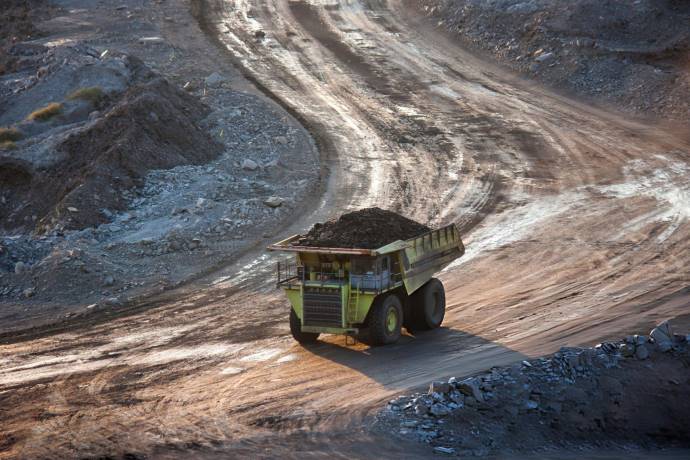
- Mining haul roads
- Temporary construction access
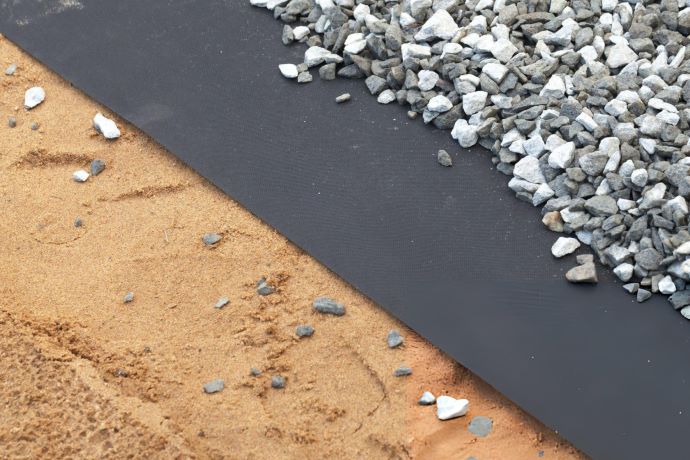
2. Gravel Driveways and Access Roads
Should I put geotextile under gravel?
Yes, especially on soft or mixed soils. Without separation, gravel gradually sinks and mixes with soil, increasing maintenance cost.
Placing woven geotextile beneath gravel:
- Prevents contamination
- Improves load distribution
- Reduces long-term material replacement
For residential or agricultural access roads, this significantly extends driveway lifespan.
3. Construction Platforms
Temporary crane pads and working platforms often use high-strength woven geotextiles to distribute loads and improve safety on weak subgrades.
This reduces differential settlement and improves stability during heavy equipment operation.
4. Embankments and Soil Reinforcement
In embankment construction, woven geotextiles enhance slope stability and reduce lateral movement. Their tensile strength contributes to overall structural reinforcement while maintaining filtration.
Cost Considerations
Price varies depending on:
- Tensile strength rating
- Roll size and weight
- Compliance with ASTM or AASHTO standards
- UV stabilization level
Lower-cost products may lack sufficient strength or durability. Selecting based on performance requirements rather than price alone ensures long-term cost efficiency.
Buyer Checklist Before Purchasing
Before placing an order, request:
- Tensile strength (MD & CD)
- Elongation percentage
- AOS value
- Permittivity rating
- Puncture resistance
- UV resistance test data
- Compliance with AASHTO M288 or ASTM standards
Matching specifications to soil and load conditions is essential for successful performance.
Frequently Asked Questions
When should I install geotextile?
Install after final subgrade preparation and before aggregate placement to ensure effective separation and reinforcement.
How long does woven geotextile last?
When buried and protected from sunlight, it can last several decades, often 25–50 years depending on environmental conditions.
Should geotextile go under gravel?
Yes, particularly on weak soils. It prevents gravel loss into subgrade and maintains structural stability.
Final Thoughts
Selecting the right woven geotextile requires more than choosing a strong fabric. It involves evaluating soil conditions, load requirements, filtration compatibility, durability expectations, and installation methods.
When properly specified and installed, woven geotextiles provide long-term structural performance, reduced maintenance, and improved project efficiency. Making an informed decision today ensures your infrastructure remains stable and cost-effective for decades to come.