Types of Waste Used in Waste-to-Energy Power Plants
Key Takeaways
- Waste-to-Energy mainly uses non-recyclable waste - WtE plants primarily process municipal solid waste, industrial non-hazardous waste, organic residues, and certain plastics that are not economically recyclable, helping reduce landfill dependence.
- Technology choice depends on waste type and regulation - Incineration, gasification, pyrolysis, anaerobic digestion, and RDF systems each suit different waste characteristics, energy goals, and environmental standards, making proper waste sorting and compliance essential.
- WtE offers benefits but comes with trade-offs - While WtE reduces landfill volume and recovers energy, it raises concerns around emissions, cost, and recycling displacement, meaning it works best as part of an integrated waste management system rather than a standalone solution.
Waste-to-Energy (WtE) plants convert various kinds of waste into usable energy like electricity, heat, or fuel.
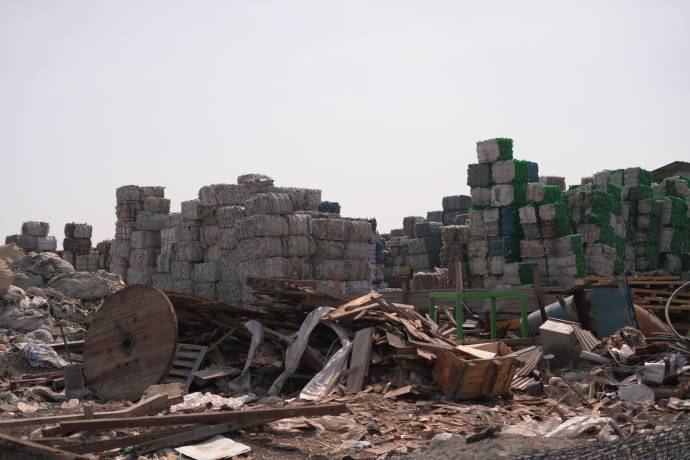
The most common feedstock for these systems is municipal solid waste (MSW) — everyday garbage from households, businesses, and public spaces that includes organic materials (like food scraps and wood) and combustible synthetic materials (like plastics) — because it contains both biomass and energy-rich compounds.
Beyond MSW, several other waste streams are suitable for energy recovery:
- Industrial non-hazardous waste: residues from manufacturing or processing that are not suitable for recycling but have calorific value.
- Agricultural and organic waste: crop leftovers, manure, and other organic residues produce biogas through biological processes like anaerobic digestion.
- Plastic and rubber waste: non-recyclable plastics with high heating value are often included in thermal conversion systems like pyrolysis or gasification.
- Sewage sludge: the organic sludge from wastewater treatment can be processed to produce biogas.
WtE plants usually require preprocessing — sorting, shredding, drying, or removing recyclables — to improve energy yield and reduce emissions.
Terms and Conditions for Waste-to-Energy
Operating a WtE plant is not as simple as dumping trash into a furnace. Industry operators must address multiple criteria and conditions before, during, and after processing:
1. Feedstock Quality and Preparation
WtE systems perform best when the waste stream has predictable properties, such as a known calorific value and moisture content. This often means sorting out non-combustibles (like glass and metals) and separating hazardous substances before energy conversion.
2. Environmental Regulations
Plants have to meet strict emission limits established by environmental authorities (e.g., particulate matter, NOx, dioxins). Modern WtE facilities use advanced flue gas cleaning technologies — scrubbers, filters, and continuous monitoring — to keep air and water pollution within acceptable legal ranges.
3. Waste Management Frameworks
Many regions require that WtE be part of an integrated waste management plan, including robust recycling and reduction efforts. WtE is best seen as complementary to recycling, not a replacement for reduction and reuse.
4. Residue Handling
After energy conversion, ash and other solid residues remain. Bottom ash can be treated and recycled (e.g., as construction material), while fly ash may need stabilization and disposal in lined hazardous waste facilities.
Meeting all these conditions ensures that WtE plants operate safely, efficiently, and in ways that minimize environmental harm.
Types of Technology in Converting Waste into Energy
WtE technology varies depending on waste composition, energy goals, and environmental priorities. These are the major technological pathways in use today:
1. Incineration (Mass Burn)
The most widespread approach involves combusting waste at high temperatures (commonly 850–1,100 °C) to generate heat that produces steam, which drives turbines to make electricity. Modern incinerators are paired with emission controls to reduce pollutants.
Advantages: proven, handles mixed waste, reliable energy output.
Challenges: requires robust pollution controls and produces ash residues.
2. Gasification
Waste is heated with limited oxygen to form a synthesis gas (syngas) that can power generators or be further refined into fuels. Gasification can offer higher energy efficiency and lower emissions than traditional incineration.
Advantages: more efficient, lower emissions.
Challenges: sensitive to feedstock quality, more complex operations.
3. Pyrolysis
This involves heating waste without oxygen to produce syngas, bio-oil, and char. Pyrolysis is often used for plastics, rubber, or mixed waste with high calorific value.
Advantages: potential for liquid fuels.
Challenges: less mature for large mixed waste streams.
4. Refuse-Derived Fuel (RDF)
Waste is pre-sorted, shredded, and dried into a consistent solid fuel that can be burned in boilers or co-fired with other fuels, like coal, in industrial plants.
5. Anaerobic Digestion
A biochemical method where microorganisms break down organic matter without oxygen to produce biogas (mainly methane). This biogas can fuel engines or be upgraded into renewable natural gas.
6. Advanced Technologies
Some facilities use plasma gasification — ultra-high temperatures created by plasma torches — to break down waste into syngas with minimal residue. While promising, these systems remain expensive and less widespread.
Each technology has its benefits depending on the waste profile and local needs, and many facilities combine approaches to optimize performance.
Debates and Drawbacks of the Waste-to-Energy Method
Although WtE has strong environmental and waste management benefits, it also faces debate and criticism from experts and communities:
Environmental Concerns
WtE combustion produces carbon dioxide (CO₂), and while it avoids methane emissions associated with landfills, its CO₂ output per unit of electricity can be higher than some low-carbon sources like wind or solar.
Pollution Risks
Despite modern emission controls, WtE facilities still release pollutants (such as dioxins and particulates) if not properly managed. Community opposition often stems from concerns about air quality and health impacts.
Waste Hierarchy Criticism
Environmental advocates argue that WtE should not replace recycling and reduction strategies. Materials like metals and high-value plastics are more beneficial to recycle than burn — recycling saves energy and raw materials.
Cost and Infrastructure Requirements
WtE plants require significant capital investment and must operate within an integrated waste management infrastructure, including collection, sorting, and recycling systems. Without a steady, predictable waste stream, operations can become uneconomical.
Conclusion
Waste-to-Energy is a sophisticated and evolving approach to transforming waste streams into valuable energy.
By understanding the types of waste suitable for conversion, the technical and regulatory conditions required, the various conversion technologies available, and the legitimate debates surrounding the method’s drawbacks, readers can appreciate both the promise and limitations of WtE.
With strong design, regulation, and integration into broader waste management systems, WtE can reduce landfilling, support energy generation, and contribute to circular economy goals — but it must be paired with robust reduction and recycling efforts to truly maximize environmental benefit.